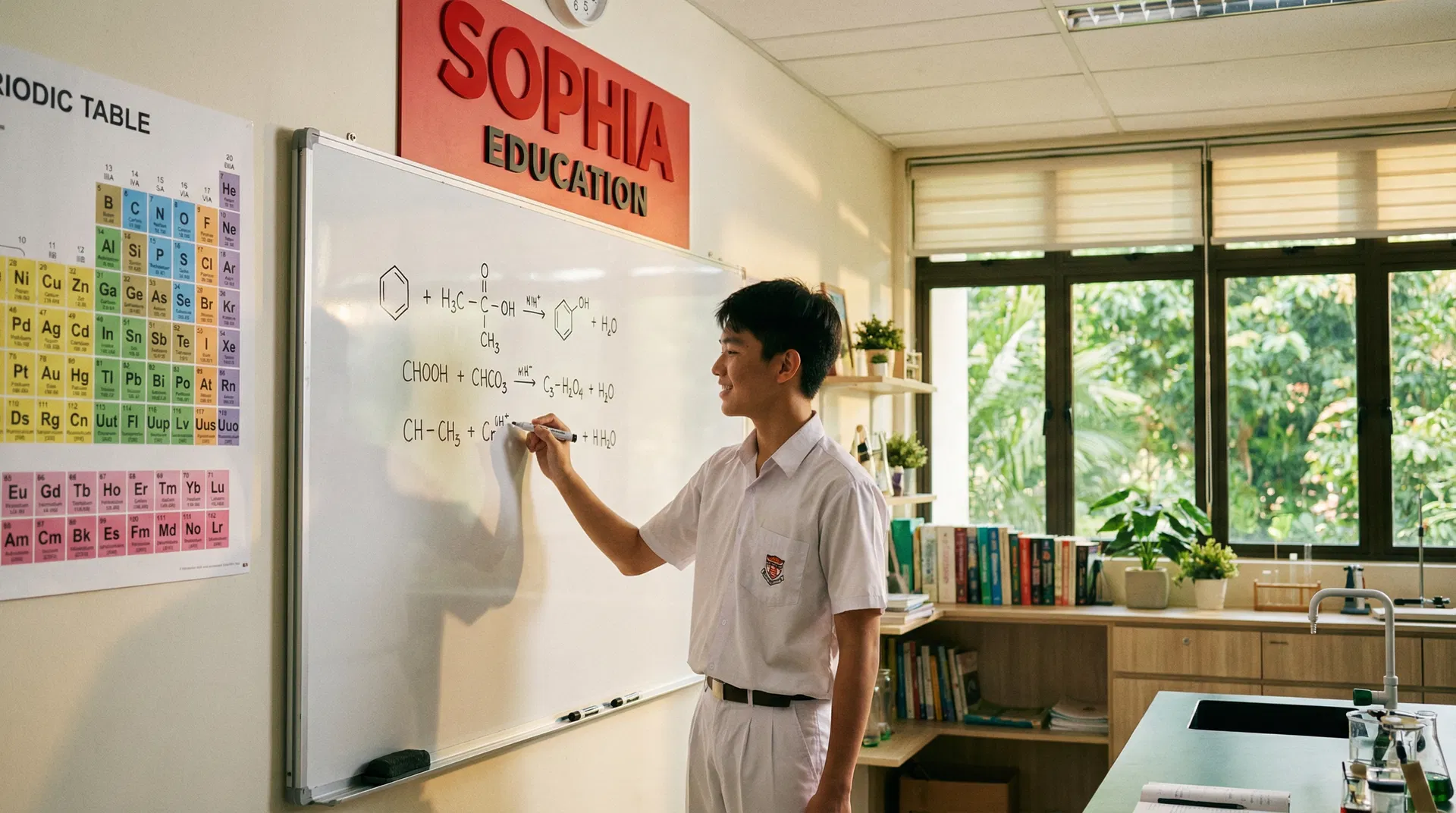
O-Level Chemistry: Mastering the Periodic Table in 7 Days
The Periodic Table is the foundation of O-Level Chemistry. Master it in 7 days with this structured day-by-day plan from our experienced Chemistry tutors.
The Periodic Table underpins almost every topic in O-Level Chemistry — from atomic structure and bonding to reactivity series and electrochemistry. Students who truly understand the Periodic Table can answer questions across multiple topics with confidence. Here is our 7-day plan to master it.

Day 1: Understand the Structure of the Periodic Table
Learn the organisation: periods (horizontal rows) and groups (vertical columns). Elements in the same group have the same number of valence electrons and similar chemical properties. Elements in the same period have the same number of electron shells. Understand why metals are on the left and non-metals on the right.
Day 2: Group 1 — The Alkali Metals
Li, Na, K, Rb, Cs, Fr. Going down Group 1: atomic radius increases, ionisation energy decreases, reactivity increases, melting and boiling points decrease. Know the reactions with water (produces hydrogen gas and metal hydroxide) and with oxygen (produces metal oxide).
Day 3: Group 7 — The Halogens
F, Cl, Br, I, At. Going down Group 7: atomic radius increases, electronegativity decreases, reactivity decreases, melting and boiling points increase. Know the displacement reactions: a more reactive halogen displaces a less reactive one from its salt solution.
Day 4: Transition Metals
Transition metals have variable oxidation states, form coloured compounds, and act as catalysts. Know the colours of common transition metal ions: Cu²⁺ (blue), Fe²⁺ (pale green), Fe³⁺ (yellow-brown), Mn²⁺ (pale pink), Cr³⁺ (green).
Day 5-7: Periodic Trends and Applications
Across a period (left to right): atomic radius decreases, ionisation energy increases, electronegativity increases. Use these trends to explain bonding type (ionic vs covalent), reactivity, and physical properties. Practise applying these trends to unfamiliar elements in exam questions.
Memory Tip: Use the mnemonic "Little Nasty Kids Rub Cats Furiously" for Group 1 elements (Li, Na, K, Rb, Cs, Fr).
Sophia Education's O-Level Chemistry classes use structured notes and visual diagrams to make complex topics like the Periodic Table easy to understand and remember. Book a trial lesson today.
Trial Lesson
Struggling with O-Level Chemistry? Our expert tutors can help. Book a trial lesson today — no commitment required.
WhatsApp Us Now →📞 +65 8875 0044About the Author
Mr Jimmy Lim is a specialist tutor at Sophia Education Singapore, with extensive experience teaching O-Level Chemistry to students across JC, O-Level, IP, and PSLE levels.
Want to Improve Your O-Level Chemistry Grades?
Join hundreds of Singapore students who improved their grades with Sophia Education's small-group tuition.